
States and Absolutism
OVERVIEW
Early modern Europe is often associated with its monarchs, from Henry VIII in England and Ireland, to Louis XIV in France, to Catherine the Great in Russia. Monarchy, or rule by one person, was the norm across much of Europe and beyond. There was a trend towards stronger or more 'absolute' monarchs, exemplified by the reign of Louis XIV from 1643 to 1715, so much so that the seventeenth and early eighteenth centuries have sometimes been called the Age of Absolutism. But there were other forms of government in the same period, such as composite monarchies, city-states, and republics. Even absolute monarchs had to negotiate with other powers, from guilds to bishops to parliaments. Monarchs often claimed to resolve crises by unifying their territories, yet the competition for territory between monarchs let to new conflicts. The lecture introduces absolute monarchs and places them in the wider context of early modern government.
The seminar looks at a private letter written by Louis XIV to his son, also called Louis and known as the Dauphin. This was one of several letters that the king wrote to his son with a view to preparing him for kingship. This was not unusual in the early modern period. Louis' letter was part of a long tradition of 'mirrors for princes', texts designed to advise kings, queens and other rulers on how to rule. The letters to the Dauphin are one of the best guides to Louis XIV's conception of monarchy, but like any source they need to be taken with several pinches of salt.
ESSENTIAL READING
Butters, Humfrey. 鈥楾he Theory and Practice of Politics and Government 1500-1800.鈥� In Beat K眉min (ed.), The European World, 1500-1800: An Introduction to Early Modern History, 4th edn. (2022).
'Memoir for the year 1661'. In Louis XIV, A King's Lessons in Statecraft: Louis XIV, Letters to his Heirs. Trans. Herbert Wilson, ed. Jean Longnon (Port Washington, NY, 1970), pp. 39-59.
Jean Longnon, 'Introduction,' in Louis XIV, trans. Wilson, ed. Longnon, pp. 7-33 (the text after p. 24 is optional)
PRIMARY-SOURCE QUESTIONS
- what did the ideal monarch look like, according to Louis XIV?
- how far was Louis' vision of monarchy an 'absolutist' vision?
- what are the strengths and limits of this source as a window onto Louis XIV's ideas (Longnon's 'Introduction' will help here)?
GENERAL QUESTIONS
- was Louis XIV a typical or atypical ruler in early modern Europe?
- what if anything was 'modern' about early modern states?
* * *
RECOMMENDED READING
Burke, Peter, The Fabrication of Louis XIV (1992), chapter 12 鈥楲ouis in perspective鈥�, which compares Louis with other rulers. There is a short version of the book鈥檚 wider argument in History Today .
Henshall, N., The Myth of Absolutism (1992), scan of . The book鈥檚 overall argument is summarised in History Today 42 (1992)
Elliott, J.H., 鈥�, P&P 137 (1992) – this article explores how many monarchs ruled over more than one territory and that these were often diverse and dispersed.
Cardim, P., T. Herzog, J. J. Ruiz Ib谩帽ez, G. Sabatini (eds), (2014) (ebook) This pursues this idea further, examining the global impact of such composite or polycentric monarchies.
Hindle, S., and B. K眉min, 鈥楥entre and Periphery鈥� in Beat K眉min (ed.), (3rd ed, 2018), 359-67. This explores where power was located in early modern Europe.
Skinner, Q., 'A genealogy of the modern state', Proceedings of the British Academy, 162 (2009), pp. 325–370. This traces the origins of the idea (and term) of a state and explains how the concept changed over time.
FURTHER READING
Anderson, M.S., The Origins of the Modern European State System 1494-1618 (1998), scan of
Black, J., (2004) (ebook)
Black, J., The Rise of the European Powers 1679-1793 (1990), scan of ch. 4 This examines the clashes between European nations into the eighteenth century.
Bonney, R., The European Dynastic States 1494-1660 (1991), scans of ch. 4 鈥� and
Braddick, Michael, State Formation in Early Modern England, 1550-1700 (2000) – ebook
Ellis, S. G., 鈥楾he limits of power: the English crown and the British Isles鈥� in P. Collinson (ed.), The Sixteenth Century, 1458-1603 (2002)
Miller, J., (ed.), Absolutism in Seventeenth Century Europe (1990)
Fichtner, P. Sutter, The Habsburg Monarchy 1490-1848: Attributes of Empire (2003)
Kennedy, P., The Rise and Fall of the Great Powers: Economic Change and Military Conflict from 1500-2000 (1989), chs. 2 and 3.
Kirshner, J., et al., 鈥樷�� Journal of Modern History, 67 (1995)
Melton, J. Van Horn, 鈥� German Studies Review 8 (1985)
Wilson, P., (2000) (ebook)
ELECTRONIC RESOURCES:
- collection of primary sources relating to Louis XIV鈥檚 France
- official website relating to palace and park of Versailles, France
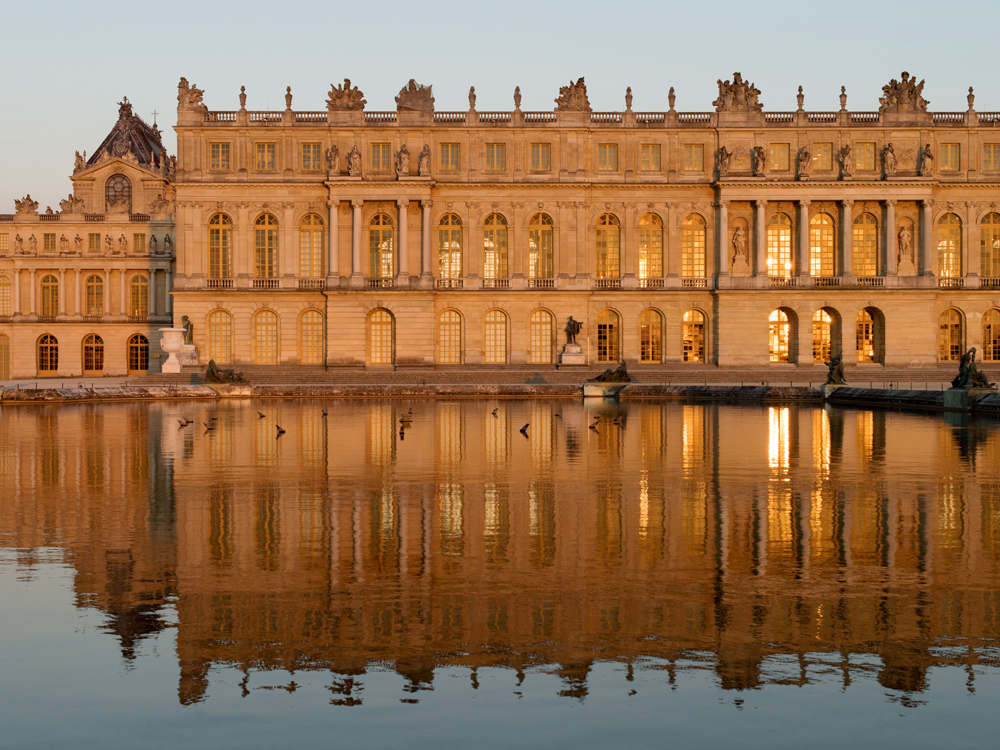
BBC Radio 4 Programme 鈥楽hadow of the Sun King鈥� and
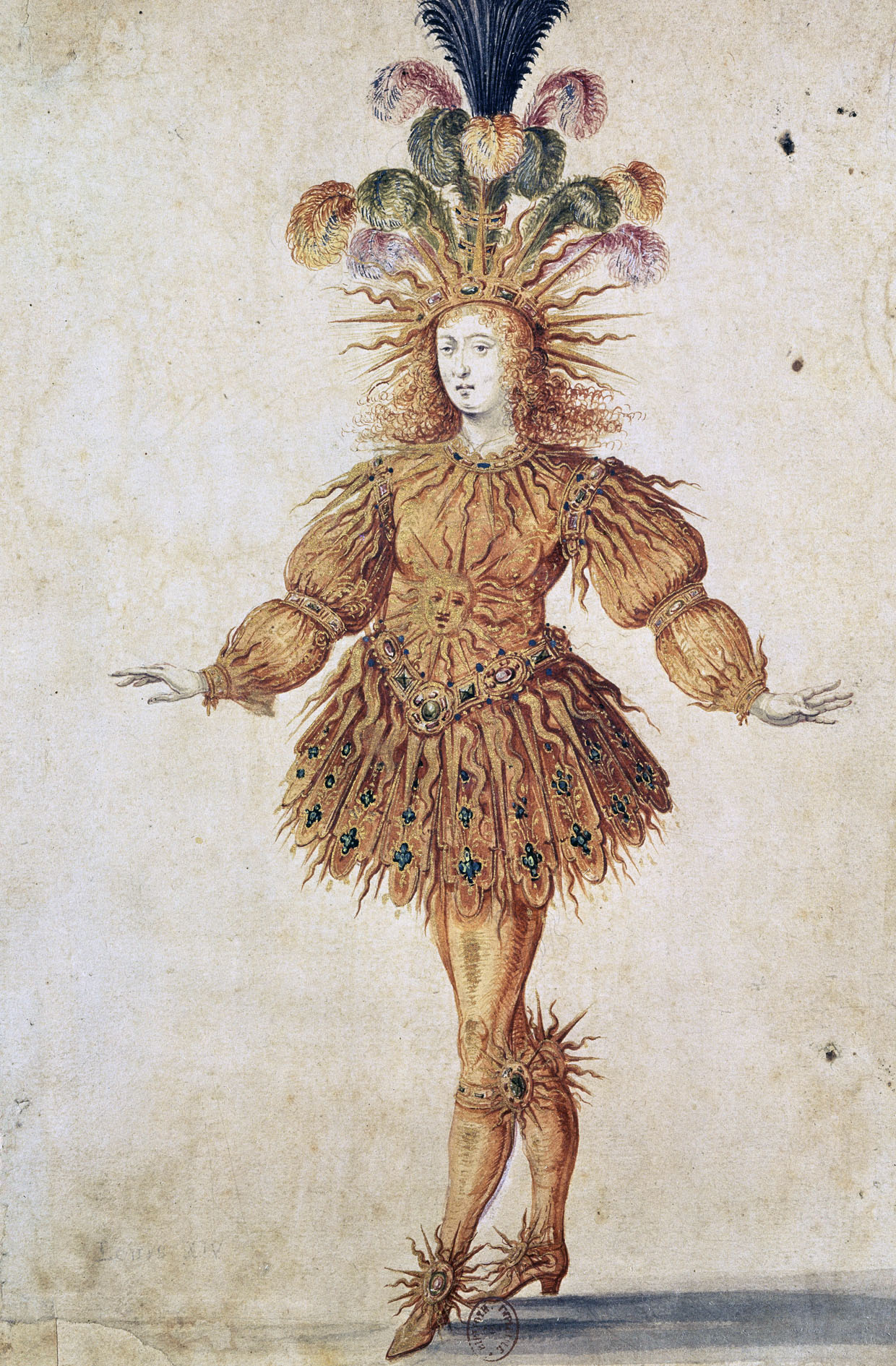
Louis XIV wearing the costume of Apollo as the 'Sun King'
James I鈥檚 advice on kingship, in which he says kings are 鈥榩ublike persons 鈥et 鈥pon a publike stage, in the sight of all the people鈥�. Click on 鈥榲iew the images to open up pdfs of the original text from this 1603 work.
BBC Radio 4 鈥業n Our Time Programme鈥�
- account from Stanley Payne鈥檚 A History of Spain and Portugal
documents relating to the Reformation and the Revolt of the Low Countries, 1555-1609
- short overview by historian J. P. Sommerville
collection of primary sources relating to Peter the Great鈥檚 Russia
BBC Radio 4 鈥業n Our Time Programme鈥�
There is plenty of primary material on (Anglophone), Biblioth猫que Nationale鈥檚 digital library Gallica: